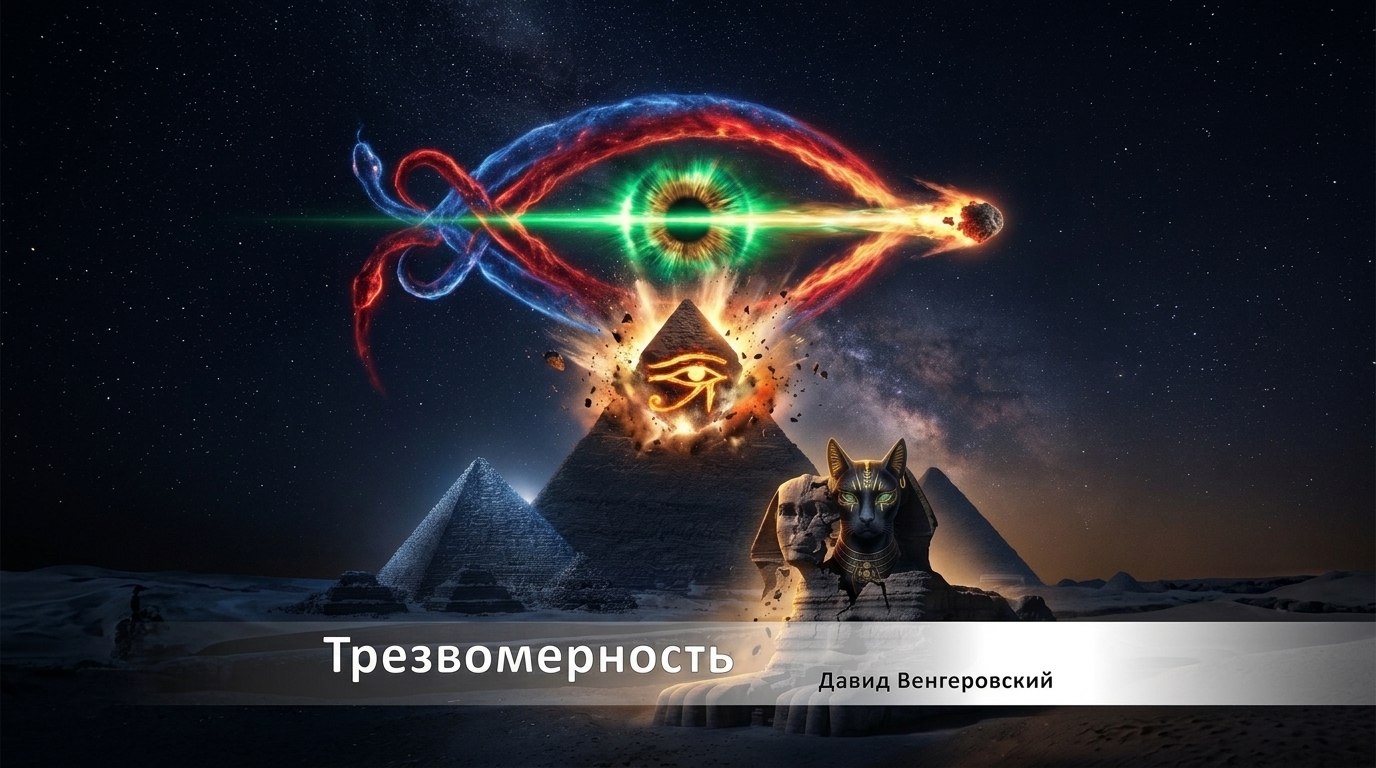
Трезвомерность
Концептуальный музыкальный альбом, основанный на методе Геннадия Андреевича Шичко и трезвенного мировоззрения.

Sonic programming is a form of social engineering that uses sound to transmit information, shape perception, and influence human behavior. Music can be designed as a functional memory device for information, using sound to encode and transmit deep conceptual data. When it is built on the principle of purposefulness, repetitive listening can make it operate much like a modern prayer or a secular mantra. The listener is influenced by an artificial system: the musical source becomes an artificial mechanism for shaping human action through the information it contains. This is where the architecture of sound begins its effect. it's actually where information enters the senses and becomes part of human behavior.
The process is shaped by its purpose, while noise can create conflict. For example, while reading these words, a quiet environment can help the reader concentrate, allowing information to enter the inner world through the visual spectrum of perception. During listening, information is transmitted through the acoustic spectrum. When these two channels are coordinated, however, they can work together rather than compete. So, the environment becomes an influential space in which unified information is experienced. When we listen to a song while reading its lyrics, our mind gradually learns to distinguish between the sound itself and the linguistic information carried by the lyrics, creating harmony between the two sensory channels.
Hit play to hear me out within this matrix architecture. Human beings interpret the world through their senses. We can feel the surface beneath us, visually stabilize our attention on a text, or focus on the sounds surrounding us. These sensory channels can also be deliberately coordinated: by listening to spoken words while reading them, the listener can focus attention on the information and combine two perceptual channels into a unified experience. In this state, visual and auditory information reinforce one another, giving the brain more than one pathway through which to encode and retain what it perceives.
Imagine being invited to a social event that combines food, conversation, and dancing. From the moment you arrive, sound begins to shape the atmosphere. During the reception, familiar, nostalgic, or contemporary songs create a recognizable sonic environment that reflects aspects of the guests’ identities while allowing everyone to participate in a shared atmosphere. This is what we often call “background music.” It does not necessarily demand conscious attention, yet it helps establish a common sense of place and presence.
Then comes the ceremony, the ritual that gives the gathering its central meaning. At a private wedding, this may be expressed through the words, music, and symbolic actions that accompany the union of family members. At a public event, the same function can be performed by the main speaker, whose message becomes the central reference point that other speakers reinforce and interpret. At a concert, a famous musician’s well known song can perform a similar function. People who may otherwise have little in common recognize the same melody, respond to the same rhythm, and temporarily become a shared audience.
In this sense, music can create a micro audience experience within a larger social environment. It provides a common sonic reference through which different individuals can recognize one another as participants in the same moment. The melody, rhythm, lyrics, and surrounding context work together to establish a shared vibe, a temporary state of collective presence created through sound.
The environment contains sound in both natural and artificial forms. Music can reinforce an artificial environment by shaping human activity through information and influencing the body through acoustic effects. This information acts upon human minds and contributes to the formation of a collective human aggregation that responds to the matrix of possibilities presented within its environment. The resulting behavior is shaped by the culture, context, and social patterns surrounding us.
Now back to you, and the language you interpret. Every profession develops its own language, and the meaning of that language can change from one environment to another. Within larger social systems, different groups and professions develop specialized vocabularies that allow them to preserve, organize, and transmit knowledge. Data becomes useful when it is structured into functions, tools, and practices that serve a larger system, whether natural or artificial.
The same principle appears in branding. A name, symbol, or logo can become a shared mental reference through repeated exposure, while sound adds another layer of recognition. A marketing jingle, a theme song associated with a film or series, or even a song repeatedly hummed by an employee can become connected to a person, product, organization, or place.
Programming introduces another dimension. The programmer often needs silence to concentrate, construct a function, and organize information into an executable form. The function itself becomes the opposite of that silence: it is the structured expression that closes the loop and activates the system. This is one of the reasons I created music: to transform structured information into a form that can be heard, remembered, and experienced in action.
This is why programming operates at a management level: management is the practical process of identifying objective possibilities, setting goals, and achieving the chosen goals through purposeful action.
From our earliest encounters with the world, as people we learn to organize recurring patterns of sound. A child exposed to an unfamiliar language gradually begins to distinguish recurring words, rhythms, intonations, and expressions across songs, conversations, films, and everyday life. Repetition turns unfamiliar sounds into recognizable patterns, while the surrounding musical culture contributes to the formation of memory, preference, emotion, and cultural identity. Musical genres therefore become part of the environment in which these patterns develop, whether the dominant sound is Middle Eastern music, rock, classical music, electronic music, or another tradition. Neuroplasticity allows these systems to remain adaptable, connecting established patterns from the past with new information and changing circumstances. The result is not predetermined behavior, but a continuously developing relationship between experience, memory, perception, and the possibilities available in the present.
Programming applies a related principle in a deliberate form. A programmer creates a space for concentration and silence in order to identify patterns, structure information, define functions, and build systems that can produce a desired result. The function is the organized expression of thought that turns structured information into action. This is also where programming meets management: management can be understood as the practical process of identifying objective possibilities, setting chosen goals, and achieving those goals through purposeful activity. I created my music within this same principle, as an artificial expression adapted to the natural relationship between thought and action, transforming structured information into a form that can be heard, remembered, and experienced through practice.
Music is a physical and informational process at the same time: a digital audio file contains encoded instructions that a sound system converts into pressure waves, which are then processed by the auditory system and interpreted through each listener’s physiology, memories, emotions, cultural background, and learned patterns. The result is not identical for everyone: one person may dance, another may withdraw, another may sing along and memorize the lyrics, while someone else may turn the music off. When lyrics are read while a song is playing, auditory and visual information can reinforce learning by connecting language, sound, emotion, and memory. In social settings, the same mechanisms can coordinate collective behavior, from creating a shared atmosphere to encouraging dancing, eating, drinking, or leaving at the end of an event. Long before digital systems existed, communities used repeated songs, chants, and prayers to preserve and transmit knowledge across generations.
Концептуальный музыкальный альбом, основанный на методе Геннадия Андреевича Шичко и трезвенного мировоззрения.
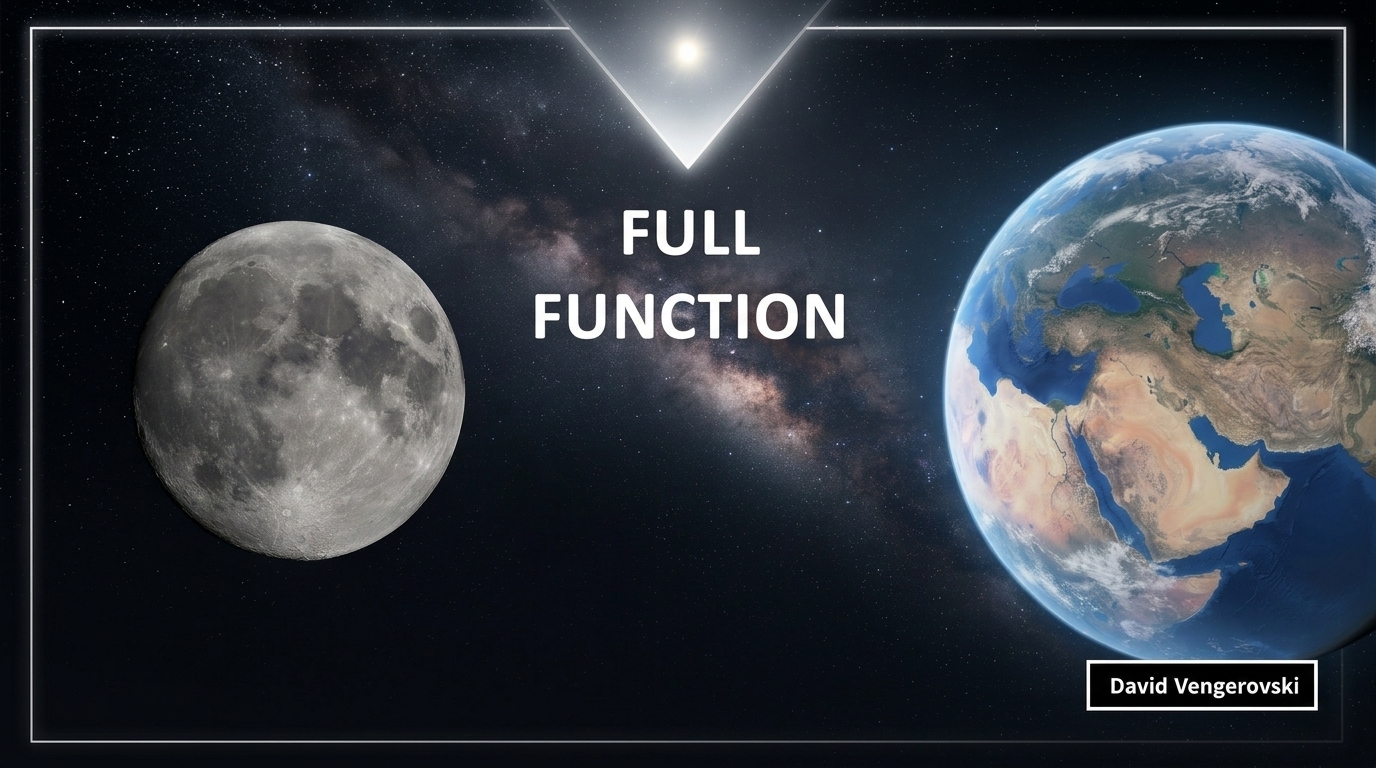
Connection of matter, information, and measure of a Full Function sound.
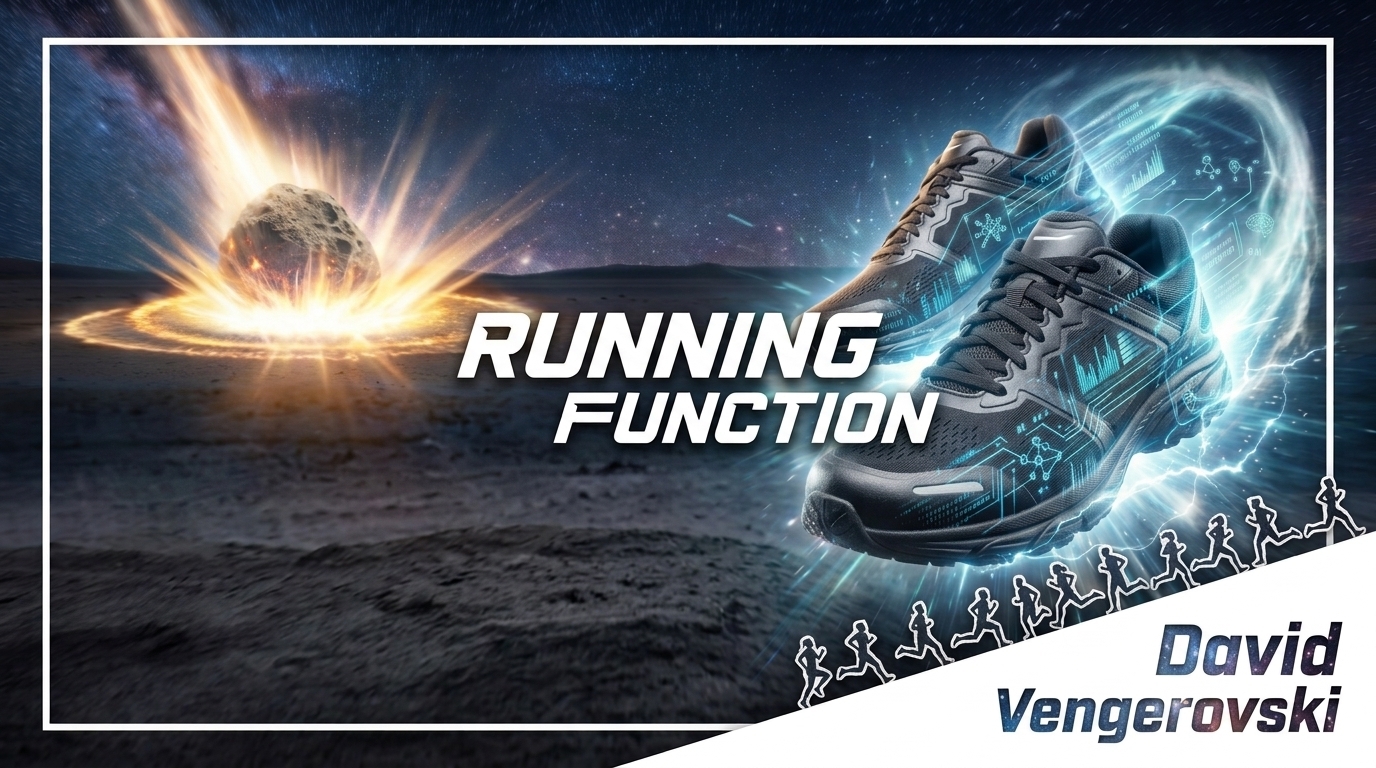
A futuristic fitness journey built for movement, discipline, and self-improvement.
Музыкальный альбом исследование мышления, культуры, интеллекта и принципов управления через звук.
My music builds on this ancient capacity of sound to connect information with emotion and conscious experience.
An album can also be designed as a practical system for action. Running Function, for example, is structured specifically for running, allowing the music to become part of a gradual training routine. A beginner can start with one song per run, gradually increase the duration, and eventually use part of the album for a shorter weekly run and the full album for a longer one. For walking, I suggest a different approach: listening to Full Function while observing the environment around you, including nature, people, machines, and the night sky, and paying attention to the processes connecting them. In this sense, the music becomes a framework for repeated practice, observation, and learning.
Since Yuri Gagarin became the first human to orbit Earth in 1961, humanity has entered a new era of space exploration and technological development. Around the same period, high level programming languages such as FORTRAN and COBOL helped transform computing into a practical and increasingly widespread tool. Part of my music is created in several languages, while its concepts explore global politics and the history being written through the events of our time. Sonic programming is an idea for working with artificial intelligence as a tool to strengthen memory, organize information, and improve human action. If you choose to listen, try my music and see what it can do for you.
The technological advances that emerged after 2025 have opened a new era of personal music production and information sharing. Today, an individual can access capabilities that once required a professional recording studio, transforming ideas, knowledge, and experience into carefully structured musical works and communicating them directly to an audience. This creates new possibilities not only for artistic expression, but also for business strategy: music can become part of any personal brand, used as a communication system, and a focused way of delivering information. For those who choose to use it more personally, the same technology can also support reflection, learning, discipline, and individual development. Music can become a personal technological capability for turning information into sound, and preserving experience, memory, and wisdom through it. Sonic Programming is the intentional use of music as an instrument of influence.